

Search
Recent Posts

November 10, 2026 • 1 Minute Read
Children’s Nativity Program and Chili Dinner
Sunday, Dec. 6th at 5:30pm Join us for a heartwarming evening celebrating Christ in Christmas! Enjoy our Children’s Nativity Program, followed by a delicious Chili and Mac and Cheese Dinner. Bring your family, invite your friends, and come share in the joy of the season! Come for the Christmas story, stay for the chili, and make memories together! ❤️🎄 -5:00- Drop off chili or mac n cheese in the fellowship hall

October 29, 2026 • 1 Minute Read
Angel Tree
As we prepare our hearts for the Christmas season, our church family has a wonderful opportunity to be the hands and feet of Jesus. We are thrilled to launch our annual Angel Tree Ministry starting this Sunday until November 29th. Sign out an angel Purchase new items from the suggested list Return unwrapped gifts in a bag with angel tag attached by 11/29

October 27, 2026 • 1 Minute Read
Thanksgiving Community Dinner
Join us on November 25th at 6:30 PM for a wonderful evening of food, fellowship, and community! Whether you’re a familiar face or joining us for the first time, there’s a seat at the table for you! Come enjoy a delicious meal, connect with others, and share in the joy of gathering together.
October 8, 2026 • 9 Minute Read
Soul Care Ministry Update - End of 2026
As we enter the final quarter of the year, it feels like the right time to share an update on where things are headed with Church by the Sea’s Soul Care Ministry. There are two main components to this New Ministry: Stonger Still: Spiritual Direction (Formerly Biblical Counseling) & Sessions of Hope The Nomenclature: From Biblical Counseling to Spiritual Direction I've spent the past several years learning what my strengths and limitations are when it comes to counseling. I knew that stepping into counseling after my education & previous experience would reveal both areas of expertise and areas where I still need to grow. What I've come to realize is that the term counseling is probably too broad—and perhaps too clinical—for what I am actually called to do. Though I’ve had a Spiritual Director myself for the past five years, I’ve gone back and forth on whether or not to use the term for the Stonger Still Practice. It’s not as well-known a term, and it seems to carry an air of ‘control’ However, Spiritual Direction isn’t about someone directing you in a commanding sort of way. It’s a term that dates back to the 3rd and 4th Century Christians and is more about Directing the attention. In show biz, a ringmaster or magician might say something like, “May I direct your attention to ...” As the Spiritual Director, I observe, share, and maybe point you toward things in your heart and life you were standing too close to, so you can see them clearly on your own. The other reason for the switch is that ... I have a deep appreciation for psychology, psychiatry, and clinical work, particularly when they are thoughtfully integrated with a biblical worldview ... and Counseling might accidentally lead someone to believe (accidentally) that they are receiving care from a licensed mental health professional. My vocational calling is Pastoral ... I am more a Shepherd and Spiritual Guide than a clinician. For the past five years, I've worked with a Spiritual Director, and that language has increasingly helped me understand what I believe I'm actually doing. Historically, the concept is much closer to companionship or spiritual friendship: walking alongside another person, helping them pay attention to God, themselves, and what is happening in their lives. I've sometimes described this simply as "One-Anothering." The lead Director is the Holy Spirit. That's much closer to the ministry I want to build. So Stronger Still will gradually move away from using Biblical Counseling as its primary label and toward Spiritual Direction. You can learn more about Spiritual Direction at this FAQ This doesn't mean that the substance of what people experience will suddenly be different. If you've participated in this ministry, you already know what it looks like: someone walking alongside you as you navigate frustration, grief, despair, confusion, and the ordinary difficulties of life. The terminology matters primarily because it helps me establish appropriate boundaries, and is rooted in the History of the Christian Church. Knowing When to Refer Our referral network has become such an important part of this ministry. For a while, we've had Carita, a psychologist, and Payton, a licensed marriage and family therapist. Since then, we've added Katrina with Surfside Therapy, as well as Hope Greeno, who will specifically work with children and youth. I'm also continuing to develop relationships with other therapists and mental-health professionals, including people connected with neuropsychology. My first mentor at Church by the Sea, Dr. Dave Ruth, has also been an important part of this story. He is a Pastoral Counselor and what I would call a true-blue Biblical Counselor, with particular gifts in helping marriages find their footing. From now on, I will refer many Marriages to him, though some will go to Payton. My hope is that helping individuals become more connected to God on their own can have a residual effect on their marriages. My wife, Suellen, and I have learned over the years that becoming more tender and gentle with one another often starts with each of us becoming more connected to God on our own. That's the lane I want to stay in for the foreseeable future. Sessions of Hope We've now piloted what were originally called Volumes One through Four of Sessions of Hope. As we've developed the program, we've learned a great deal simply by doing it. Because the long-term vision is for this to become something scalable and potentially useful in other churches, we've been willing to adjust the structure as we go. One of the biggest changes is the way we're organizing the curriculum. Rather than simply moving from Volume One to Volume Two to Volume Three and so forth, Sessions of Hope will be organized into four different series: How We Heal How We Endure How We Love How We Grow So far, we've completed Volume One in each of those four categories. Going forward, we'll develop Volume Two, Volume Three, and so on within each category. This makes the curriculum much easier to navigate. Rather than assuming that everyone needs to follow the same sequence, people can look at the four major areas and choose the material that best fits what they are experiencing. The first two categories are particularly connected to mental health and may naturally draw people who are looking for help in those areas. Recovery material will also fit within those categories. For example, material related to the Twelve Steps will fall under How We Endure. The goal is becoming less about creating a series of classes that I personally teach and more about building a curriculum that the church can use. Multiplying the Ministry Next year, we'll have four new Sessions of Hope courses. But I have another goal: I want at least one new facilitator to take one of the existing courses, use the facilitator guide, and teach it independently. That would be a significant proof of concept. It would show that Sessions of Hope doesn't have to depend entirely on me. We could eventually have multiple courses happening simultaneously, led by different people, and the curriculum could become part of the broader catalog available to Small-Group & Bible Study Leaders. That's the direction I want to see. Pastors are people too. I'm not fundamentally different from anyone else, and I don't want this ministry to depend on the idea that I possess some unique spark that nobody else has. In fact, something beautiful is already happening: some of the people I've counseled are now helping me. They're helping me think through work-life balance, health, and how to make this ministry sustainable. The relationship is becoming a two-way street. Some of my directees have helped me as much as I've helped them ... and sometimes I wonder if they haven't helped me more. That makes me wonder: if people can facilitate something like Recovering from the Losses of Life or Rhythms of Grace for themselves, why couldn't trained laypeople also provide a basic level of Spiritual Direction? Nine times out of ten, people just need someone to listen, pray, and respond. That shouldn't have to be limited to one or two Pastors. And so eventually, I want to clearly define what lay spiritual direction looks like and what the boundaries of lay counseling and lay spiritual direction should be. Those boundaries will matter. A lay director should know when they have reached the end of their capacity. Referrals need to be easy, and the process should minimize the sense of rejection that can come when someone realizes they need a different kind of help. The message shouldn't be, "I can't help you." It should be, "I'm going to stay with you while we connect you with the right person." That will also require better screening. When an intake form comes into the office, it needs to be reviewed appropriately so that we're not handing a volunteer more than they can responsibly carry. If something is particularly heavy, it should be clear that the lay director's role may simply be to listen and provide companionship while we arrange the appropriate professional referral. I've had situations recently where I've wondered whether simply connecting someone with somebody—even if my schedule didn't allow me to see them—might have bridged a dangerous gap. It might even have saved a life. You have the potential to save a life simply by being willing to listen. And this doesn't require everyone to commit to an enormous workload. Because this is a volunteer ministry, someone might be able to meet with one person once a month. That's enough to make a difference. We can share the burden. You would also be able to refuse a case based on your own triggers For example, one of our referral counselors has personally experienced addiction-related loss in their family. Because of that history, we won't refer people struggling with addiction to that particular counselor. Boundaries like that are part of building a healthy ministry. The goal isn't to make everyone capable of helping everyone. The goal is to make sure that more people are capable of helping someone. The Future of Soul Care This is where the ministry is headed: Sessions of Hope taught by multiple facilitators, Spiritual Direction as the new language for what was formerly our Biblical Counseling ministry. Down the road, we'll also develop a formal training course for our Spiritual Direction ministry. I do believe we can eventually accredit the training for a first generation of Lay Directors. This training will give people greater confidence about where they're coming from, what they are equipped to do, and where their boundaries lie. It will also give the church greater clarity and credibility about how the ministry operates. That is the rebrand. More importantly, it is the transition from a soft launch into a fully developed Soul-Care ministry at Church by the Sea.
October 6, 2026 • 4 Minute Read
Brain Vs. Mind Pt. 2
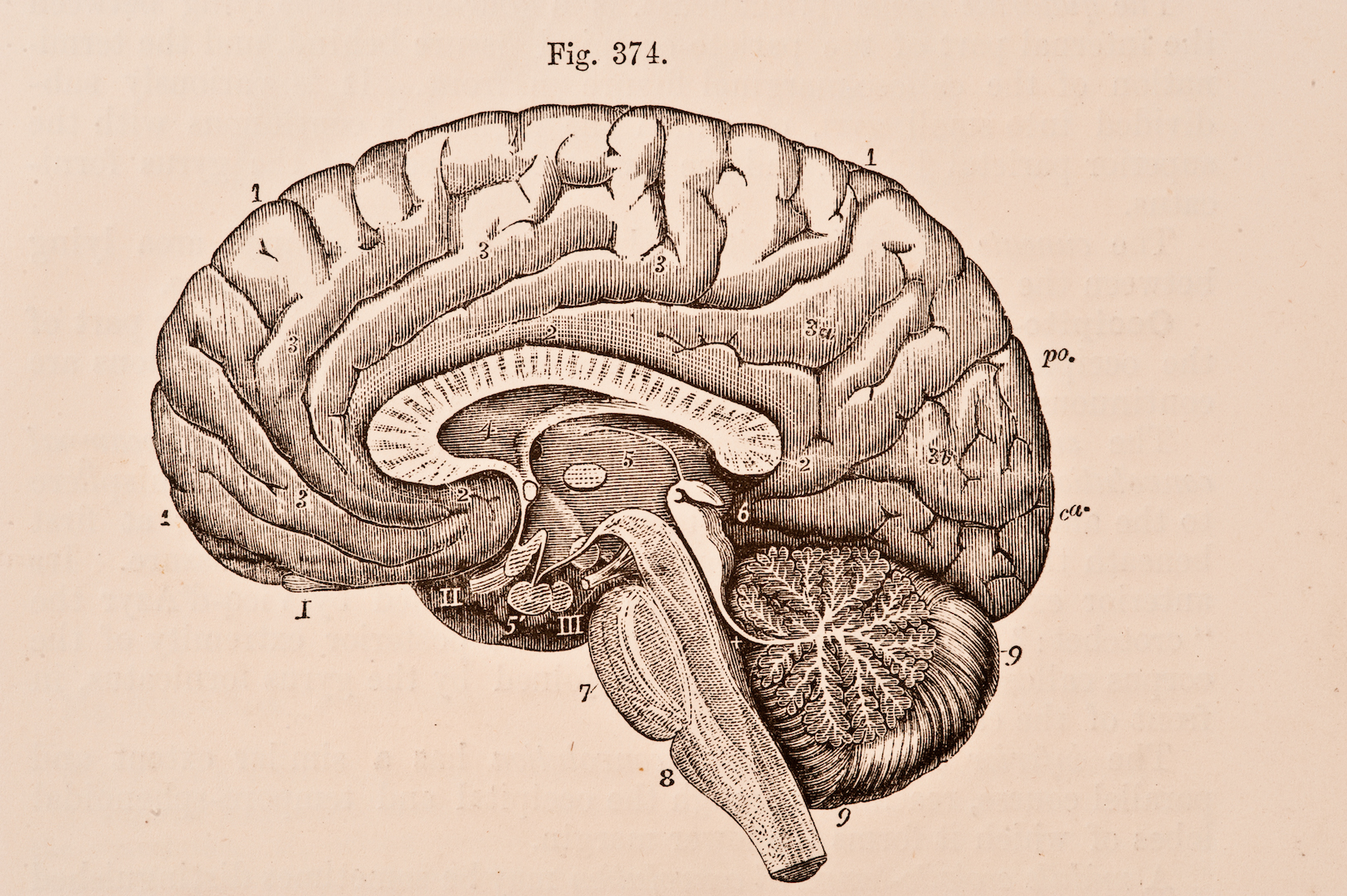
Brain Vs. Mind # 2: From Reality to a Plan Dr. Lee Warren's framework begins by helping us distinguish between the subjective, the objective, and ultimately the possible. In other words: What do I feel? What is actually true? What could be true going forward? That distinction is powerful because our feelings can be incredibly convincing. If my subjective assessment is, "Nothing ever goes the way I need it to," it can feel like an objective description of my life. But then I write down the objective reality: I've had successes. People love me. God has been faithful. There are things in my life that are genuinely good. I'm struggling right now, but struggling is not the same thing as having a hopeless life. And something begins to change. The exercise itself can bring a measure of relief. But we shouldn't stop there. Once we've distinguished the subjective from the objective, we need to assess what we've discovered and develop an action plan. That is where I want to go next. Assessment Before Action Naming reality accurately already begins to loosen the grip of our most troubling thoughts. When I say, "Nothing ever goes the way I need it to," and then force myself to look honestly at the evidence, I may discover that the statement simply isn't true. But that doesn't mean my underlying struggle isn't real. The anxiety is real. The grief is real. The exhaustion is real. The relationship may genuinely be difficult. The diagnosis may be real. The circumstances may actually be painful. Objective truth doesn't require us to pretend that everything is fine. It simply prevents the subjective experience from becoming the whole story. That distinction is crucial. The goal isn't positive thinking. The goal is truthful thinking. And once we have a clearer picture of reality, we can ask the next question: Given what is actually happening, what should I do next? That's the assessment and action plan. Why Hope Comes First This is also where the connection to our Soul Care Ministry update comes in. Volume Two of the How We Endure Series in Sessions of Hope will draw heavily from two of Dr. Warren's books: Hope Is the First Dose and Self-Brain Surgery. The first title may be my favorite book title of all time. Hope Is the First Dose. My whole life is built around hope. My ministry is built around hope. And I think there is something profoundly Christian about beginning there. Dr. Warren's Hope Is the First Dose is more memoir-like, using his own story to explore what hope means in the midst of suffering. Self-Brain Surgery, by contrast, focuses more directly on the mechanics. Warren writes as a brain surgeon and someone deeply familiar with neuropsychology and the way the brain functions. He also brings his faith into the conversation, exploring how science, faith, and an understanding of the brain can work together to help people become happier, healthier, and more whole. Because these ideas are becoming part of a future Sessions of Hope course, I want to process them here as I work through them. That's one of the reasons I write in the first place. I like to think through things on paper, and I like to share that thinking with you. We're taking these ideas out of the abstract and asking what they mean for real people, real struggles, and the very real cases that people are facing here at Church by the Sea. We've started by separating what we feel from what is true. Now we're ready for the next step: assessment and action plan.

September 22, 2026 • 3 Minute Read
Brain vs. Me
I got a little behind on my writing for you all between sessions, including my Tuesday Tidbits, Wednesday Wisdom, and Faith Fridays. We had some of my wife’s family in town from Brazil for Zoe’s eighth birthday! Even with the busy house, I managed to send the first installment in a new series. I believe it applies to all of us walking alongside each other in this new Soul Care Ministry. The core concept comes from Dr. Lee Warren, a Christian neurosurgeon. It starts by acknowledging that our brain is malleable, meaning we do not have to let it command our true selves. In other words, you have a brain, but you are not your brain. This principle allows us to step back from what is happening to us when our brain gets stuck in survival mode. Warren drew on his own PTSD from his time in Iraq. At a certain point, he realized his brain was telling him he was still in danger when he was actually safe. He developed a process using surgical metaphors to excise unwanted synapses and replace them with a newer, truer narrative. That sounds a lot like the Apostle Paul: "Be transformed by the renewing of your mind." My goal is to distill his worksheet and make it more practical for everyone. Some of us navigate ADHD or other forms of neurodivergence. Some of us try to change our partner's behavior before looking in the mirror. Others are trying to break the chains of long-standing habits and disorders we no longer wish to carry, or escape complexes handed to us by parents, bullies, or past trauma. I believe the pattern for confronting these struggles is largely universal. We will all mutually benefit, myself included, as we walk through it together. So, where do we begin? Grab a piece of paper, a journal, or a notes app, and list your chief complaints. (Chief Complaints is a medical term for charting. In this case it’s areas our Soul is wounded. Addiction, relationships, etc.) Write down the subjective aspects of those complaints. These are things like, "I feel bad about myself," or "There aren’t enough hours in the day." It is the complainy stuff, the brain static version of the situation. Next, write down objective truths you have learned from faith: "I am beloved." "Thoughts can become things, but I am not my thoughts." "The idea that others have it better is an assumption, not a fact." The following step involves an assessment and a plan.
For now, however, I want us simply to sit with the comparison. Look at what our brain defaults to as an organism primed for survival over thriving, contrasted with what we know to be true in this season where we have faith, community, and a lot to be grateful for. Just sit with that contrast.
I’ll be back with part two.


Copyright 2026 Church by the Sea
All Rights Reserved.